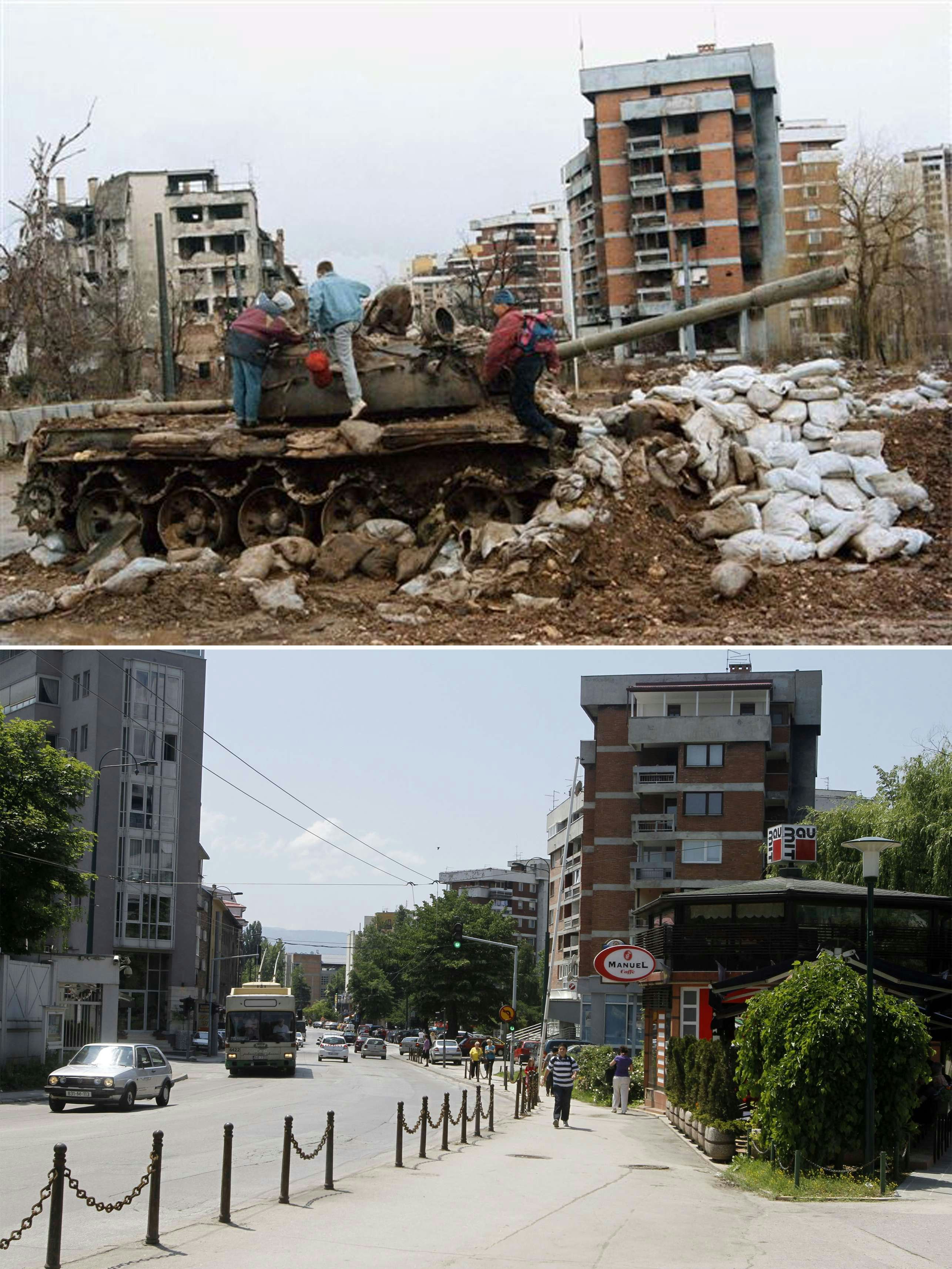
Bildvergleich: Eine Straße im Stadtteil Kovačići 1996 (oben) und 2011 (unten).
REUTERS
A combination photo shows (upper) a disused tank standing at a crossroad in front of a ruined building in the Kovacici district in Sarajevo February 1996 and (lower) people walking along the same road in the Kovacici district in Sarajevo May 30, 2011. Sarajevo announced plans on Monday to open a museum of its brutal siege by Bosnian Serb forces, saying the approaching trial of their commander Ratko Mladic made it all the more important to display the evidence. The museum will open on the siege's 20th anniversary next year and organisers said the timing of the announcement, four days after Mladic's capture in Serbia after nearly 16 years evading war crimes charges, was coincidental but fortuitous. In the early 1990s, the Bosnian capital became a symbol of suffering of its citizens, who remained stuck in the city for 3-1/2-years under daily shelling by heavy artillery and snipers from nearby hills, without water, power and food.   REUTERS/Staff  (BOSNIA AND HERZEGOVINA - Tags: CONFLICT POLITICS CITYSCAPE CRIME LAW)
Jetzt E-Paper lesen